When reviewing venture debt term sheets, one of the most common and costly mistakes founders and operators make is overlooking how interest is calculated. The structure of the loan, simple vs amortising, is often overlooked but in reality has a significant impact on the cost of capital.
Naturally, founders, operators and even investors, focus on the headline interest rate. It’s often the most visible number on the page and a “quick glance” at pricing.
But in practice, the method use to calculate interest can matter just as much, and in some cases, far more than the rate itself.
Why interest structure matters in venture debt
Two loans can advertise the same interest rate, have the same term, and be drawn for the same amount, yet produce very different cash flows and total interest costs.
The difference comes down to what balance the interest is calculated on overtime.
Understanding this distinction is critical when comparing venture debt, growth capital, or structured facilities.
Simple interest (also called “flat rate” interest)
Simple interest is calculated on the original loan principal for the entire duration of the loan.
That means:
- Interest is charged on the full loan amount every month.
- It does not reduce as you repay principal.
- You continue paying interest on capital you’ve already repaid.
Even if 80–90% of the loan has been paid back, the interest calculation assumes you still owe 100%.
Amortising interest (also called “reducing balance” or “effective interest”)
Amortising interest is calculated on the outstanding loan balance.
As principal is repaid:
- The interest base declines.
- The interest component of each repayment falls over time.
- You only pay interest on capital you are still using.
This is sometimes referred to as:
- Effective interest
- Reducing balance interest
- True amortising interest
While monthly repayments may look similar at the start, the total interest paid over the loan term is materially lower when compared to a simple interest structure.
Amortising interest is the same structure used in most home loans and mortgages: as the principal balance reduces over time, the interest charged reduces with it.
A worked example: same rate, very different outcome
Let’s look at a common venture debt scenario:
- Loan amount: $1,000,000
- Term: 24 months
- Interest rate: 12% p.a.
- Repayment: equal monthly repayments
What changes is the interest calculation method.
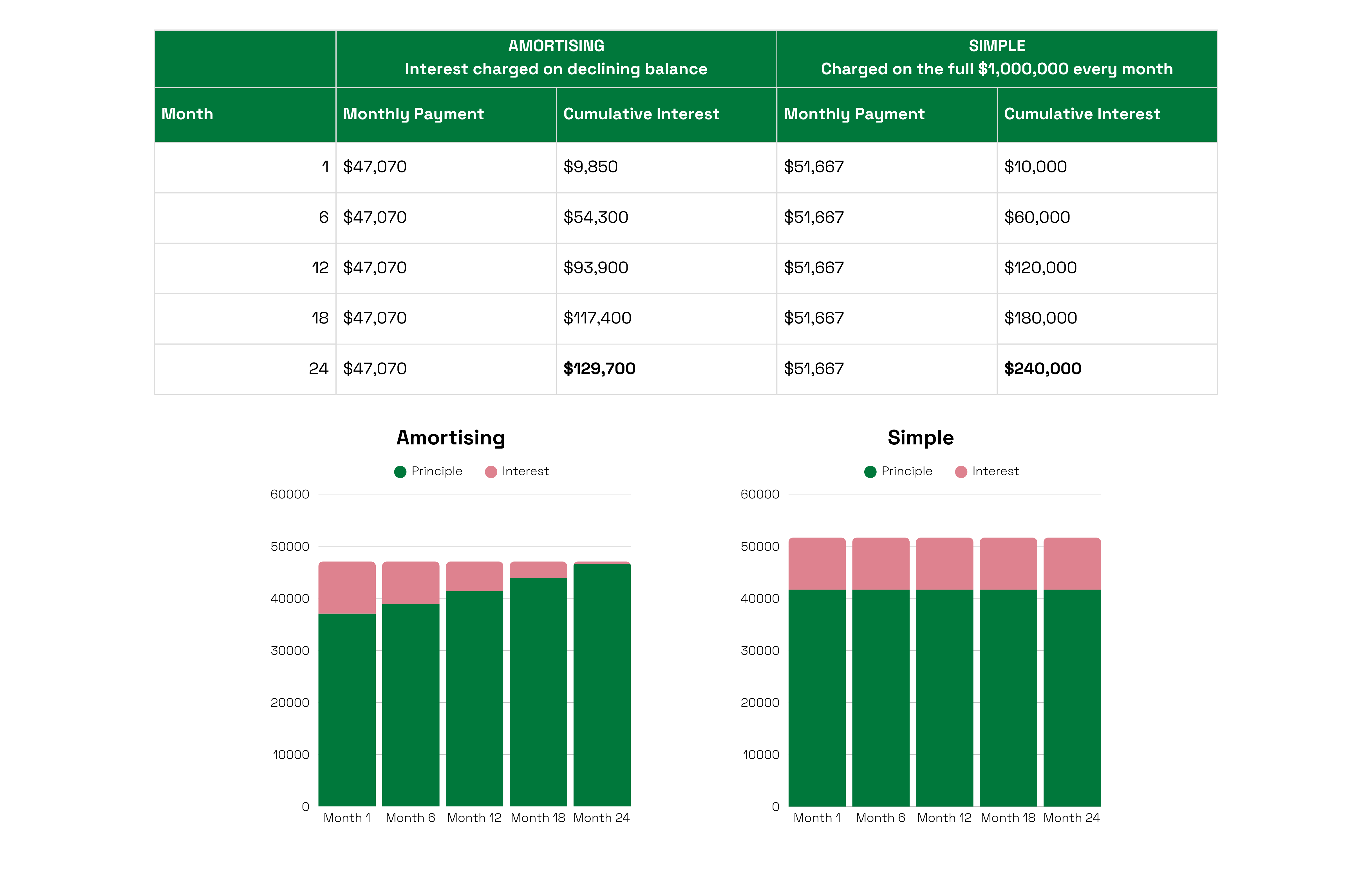
The result
Over the same 24-month term:
- The simple interest structure costs $110,237 more.
- Despite the headline rate being identical.
- Simple interest nearly doubles the true interest expense.
The difference compounds quietly each month, which is why it's often missed.
Why this mistake is so common
There are a few reasons this misunderstanding shows up frequently:
- Term sheets emphasise rates, not structure.
- "Simple" sounds benign (it isn't always).
- Cash flow tables aren't always provided.
- Many operators assume all debt amortises the same way.
In venture environments, where speed matters, these details are often skimmed but they directly affect runway, flexibility, and long-term cost.
What to look for when comparing venture debt term sheets
When reviewing a venture debt or growth capital proposal, ask:
- Is interest calculated on the original principal or the outstanding balance?
- Does the interest expense decline over time?
- What is the total interest paid over the full term?
- Can the lender show a month-by-month cash flow schedule?
The takeaway
When comparing venture debt offers, don’t stop at the headline rate.
Make sure you understand how interest is calculated, otherwise you may be paying interest on money you’ve already paid back.
At Mighty, we structure facilities using an amortising (reducing balance) interest model. We believe interest should be charged only on capital that remains outstanding, not on funds that have already been repaid. This structure aligns interest costs with actual capital usage, improves cash-flow predictability, and avoids overstating the true cost of debt.
For both investors and operators, that transparency matters when making long-term capital decisions.
If you are exploring venture debt, we are happy to walk through the structure with you and model the true cost of capital side by side. You can also explore our interactive term sheet for a plain English explanation of key venture debt terms, pricing mechanics, covenants, warrants and other commercial considerations before discussing your facility with the Mighty Partners team.